The D20 Did My Chores: 100 Adults Gave a Week to the Dice and Natural 1s Became a Lifestyle
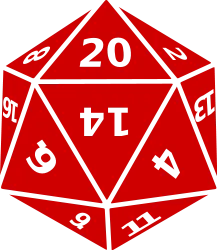
Photo: wirelizard, CC0, via Wikimedia Commons
In November 2026, 100 adults replaced their to-do lists with a twenty-sided die. Every decision got a roll. What to eat. Whether to answer that text. Which errand actually got done. Natural 20s and natural 1s were treated as binding. Not advisory. Not 'maybe later.' Binding.
This was either a brilliant cure for decision fatigue or a way to make a Tuesday feel like a cursed campaign. Reader, it was both.
The Rules of the Table
Each participant got a D20, a list of daily decisions, and a simple system. They set a difficulty class for each task, rolled, and compared the result. A natural 20 meant automatic yes or best-case outcome. A natural 1 meant automatic no or chaos. Everything in between was judged against the difficulty class. The dice could not override work deadlines, medical needs, safety, or anything involving a landlord and a leak. We are chaotic, not reckless.
Participants rolled for meals, workouts, laundry, errands, bedtime, text replies, and whether to leave the house on a Saturday. Some kept it to five rolls a day. Some went full dungeon master and rolled for what to watch on Netflix. One person rolled to decide whether to re-roll. We should have seen that coming.
Meet the Willing Victims
Hannah, 28, Minneapolis rolled for laundry on Sunday. Natural 1. The dice said no. She wore gym shorts to brunch and spent the rest of the day explaining that it was 'a bit.' By Wednesday, a natural 20 on 'answer the unknown number' led to a free pizza from a wrong-number delivery mix-up. The dice giveth.
Marcus, 35, Atlanta rolled for text replies. A natural 20 meant respond immediately. A natural 1 meant leave it on read for 24 hours. He lost a group chat thread, gained an evening, and discovered that most messages did not actually need a response within 90 seconds. 'I felt like I had exited a cult,' he said. 'The cult was my notifications.'
Elena, 42, San Diego rolled for errands. A natural 1 on 'go to Target' meant no Target. She ended up at a farmers market instead and bought a candle shaped like a tomato. She described this as 'not a need, but a win.'
The Tally: What the Dice Got Right
After seven days, we surveyed all 100 participants. The numbers were less cursed than expected:
- 68% said the dice made the week more fun.
- 54% said rolling got them to do at least one thing they had been avoiding.
- 31% said the dice caused a minor inconvenience.
- 12% said the dice caused 'a story I will tell at parties.'
- 4% said they would keep using dice for low-stakes decisions.
- 0% said dice should decide a mortgage. Good.
The biggest win was not efficiency. It was relief. A rolled 'no' is easier to accept than a self-directed 'no,' because you can blame the little plastic polyhedron instead of your own character. Participants reported less second-guessing. One person described it as 'outsourcing my executive dysfunction to a math rock.' Another said, 'I did not realize how many decisions I was making just to avoid making a decision.'
The Tally: What the Dice Got Catastrophically Wrong
Laundry lost. It lost so badly that we are considering making it a separate article. The recurring chore became the perfect villain: low-stakes, high-annoyance, endless. A natural 1 on laundry did not mean 'never do laundry.' It meant 'not today,' which is a dangerous sentence for an adult with one clean towel and a dream.
By Friday, one participant's laundry pile had a nickname and a personality. Another rolled a natural 1 on 'reply to your landlord' and turned a small leak into a three-day saga. One natural 20 on 'try a new recipe' resulted in a grocery haul of seven kinds of vinegar and a dinner that was mostly sauce. The dice got about as much right as your average Tuesday, which is to say: enough to keep going, not enough to trust with your 401(k).
Why This Works (Until It Doesn't)
Dice are having a moment. Tabletop role-playing games are no longer a niche basement hobby; they are a mainstream social activity, a streaming genre, and a shorthand for 'I would like to make a decision without making it personal.' A D20 is a tiny permission slip. It says: this is a game, not a referendum on your adulthood.
That is also the danger. Randomization is a great speed bump for low-stakes choices. It is a terrible driver for anything with real consequences. Do not roll for medical consent. Do not roll for whether to text your ex. Do not roll for a financial commitment. The dice are not your boss. They are a weird little intern who is occasionally funny and frequently wrong.
The Verdict
Most participants did not want to live by dice forever. They wanted a week off from being the decider. The experiment did not make anyone more disciplined. It made them more willing to move. That is a small thing, but small things are how you get out of a rut.
Would we do it again? Roll for initiative. If it is a natural 1, we will be wearing gym shorts to brunch and calling it a lifestyle.